Operations desk · 24/7Quote within 15 minutesLicensed UAE company · DubaiClient loginCourier login
🇰🇷 South Korea and the Gulf · background

South Korea and the Gulf: a trade history

Korea and the Gulf begins with construction in the 1970s and becomes, fifty years later, a semiconductor and shipbuilding relationship.

Quote by email · 24/7 · both directions · third-country legs through Dubai

One person beats a parcel network to South Korea and the Gulf

The freight chain is not slow because aircraft are slow, it is slow because a consignment waits at every handover. A courier removes the queues, not the kilometres.

OnBoard CourierOne person. One seat. One signature.
CollectedIn the cabin Delivered in South Korea and the Gulf, same day or next morning
Conventional air freightA parcel in a system, every handover is a queue.
Drop-offAcceptance cut-off Build-upFlight Break-downCustoms Delivered, day 3 to 5
0h24h48h72h96h+

When a seat beats a parcel, the full comparison →

Firm quote in 15 minutes

Tell us what has to fly. We answer with a flight and a price.

Five short questions. A dispatcher replies with a named departure, the delivery hour and one fixed price, day and night.

  • One named courier from collection to signature
  • Customs cleared in person on arrival
  • Licensed UAE company, proper VAT invoices

A timeline

1970s

Korean construction crews go to the Gulf

Large-scale Korean construction and engineering work in the Gulf states began in this period and became a defining part of both economies' development. It is where the relationship starts.

1980s

Heavy industry and shipbuilding scale

Shipbuilding, steel and heavy engineering grew into global-scale industries, creating the yards and the certification culture that still generate marine spares traffic today.

1990s

Electronics becomes the export

Consumer electronics and semiconductors moved Korea's export profile towards items that are small, extremely valuable and highly time-sensitive.

2000s

Semiconductors and display go to the front

Korean memory and display manufacturing became globally central, and with it the equipment, materials and metrology traffic that a hand-carry serves.

2010s

Batteries and the electric vehicle chain

Korean cell manufacturing became a strategic industry, adding a category that is both urgent and regulated in ways that constrain how it can move.

2020s

A two-way qualification relationship

European and American automotive and energy programmes qualify Korean cells and equipment, generating constant sample and test traffic in both directions.

Today

A corridor rather than a route

Korea to the Emirates carries semiconductor, marine and automotive traffic outbound and European engineering inbound, with Incheon doing a great deal of transfer work in between.

220countries and territories on the desk
500+airports a courier can be booked into
15 minfrom your message to a firm price
24/7the operations centre is awake

Three departure boards, one desk: Emirates, flydubai and Etihad for South Korea and the Gulf

A hand-carry is only as fast as the next departure. The desk watches three boards at once and books the one that lands first, then holds the one that leaves next.

Emirates

The night bank out of Terminal 3

Between one and four in the morning Emirates pushes back a wave of widebodies from Terminal 3 that reach Europe before the first meeting and Asia by the afternoon. For South Korea and the Gulf that wave is the reason a courier confirmed at eight in the evening is still delivering the next day.

Widebody only, non-stop to 140 plus cities
flydubai

The short sectors, several times a day

From Terminal 2 flydubai runs the one to five hour sectors: the Caucasus, Central Asia, East Africa, the Balkans, the subcontinent. Where a widebody leaves once a day, flydubai often leaves three times, which turns a missed slot into a ninety minute delay rather than a lost day.

Frequency is the fallback
Etihad

Abu Dhabi as the second runway

Ninety minutes down the E11, Etihad leaves from Zayed International with its own bank of departures and, for the United States, immigration cleared before boarding. When the Dubai departure for South Korea and the Gulf is gone, the desk looks at Abu Dhabi before it looks at tomorrow.

US preclearance at AUH

The desk holds no allegiance to a carrier. The booking goes to whichever board puts a courier at South Korea and the Gulf first, at a fare the quote can carry.

South Korea and the Gulf: every hour it waits is an hour it is not moving.

Five questions, one fixed price, a named flight. The desk answers within 15 minutes, day and night, and you decide.

Why South Korea and the Emirates are one logistics market, not two

Korea runs two industries where an idle hour is measured directly in money: semiconductors and batteries. Both are capital-intensive to a degree that makes the arithmetic on a courier immediate, and both depend on European, Japanese and American equipment, materials and metrology. When a part is needed it is needed on the next flight, and the customer usually knows to the hour what the alternative costs.

01

The battery and electric vehicle relationship is the newer half and it runs in both directions: Korean cells and process equipment going west, European and American qualification requirements and test material coming east. The consignments are small, frequently regulated, and almost always attached to a sign-off that other people are waiting on.

02

Shipbuilding around Busan and Ulsan adds a third strand with an older logic. A vessel waiting on a certified spare is the marine equivalent of an aircraft on ground, and the certificate matters as much as the part. Automotive around Ulsan and the supplier belt behind it generates the same prototype and homologation traffic as anywhere else.

03

Incheon deserves a sentence of its own. It is one of the best transfer airports in the world, which matters on this desk in a specific way: a consignment that has to continue to Japan, Taiwan or China after arriving is usually able to, on the same day, without the chain of custody being broken.
What that history buys you today

The practical inheritance is a construction and engineering relationship with the Gulf that is fifty years old, an industrial base whose downtime economics make the courier decision obvious, and one of the best transfer airports in the world sitting in the middle of it.

For a time-critical movement that means the flights are dense, the counterparties understand why certification matters, and a consignment that has to continue past Korea usually can, on the same day.

Courier or air cargo?

On board courier vs air cargo

Everything on this desk could travel South Korea, UAE as air cargo instead. This is the difference a person in a seat makes.

On board courier

A person in a seat

  • Leaves on the next available flight, often within hours of your call, 24/7.
  • One named courier holds the consignment from collection to signature.
  • Travels in the aircraft cabin wherever the airline, cargo classification and security rules permit it; the transport configuration is confirmed before booking.
  • No warehouse, no consolidation window, no overnight sort.
  • Customs cleared in person, questions answered at the counter, immediately.
  • Same-day delivery is realistic on most sectors out of the UAE.
  • Built for high-value, fragile, temperature-critical goods and originals.
  • Proof of delivery with signature, ID check and a photograph within minutes.
  • A human being you can call at any point of the journey.

Air cargo & express freight

A parcel in a system

  • Waits for the next consolidation and space allocation, not for you.
  • Passes through many hands: hub, build-up, ramp, break-down, delivery agent.
  • Rides in the hold, frequently sitting in a warehouse overnight.
  • Each handover is a queue, and each queue is where hours disappear.
  • Cleared in a batch by a broker; one query can idle the shipment for a day.
  • Next day at best on most lanes, two to three days if it is held.
  • Chain of custody is a scan history, not a person with the box.
  • Signed for by whoever happens to be at the door.
  • Right answer for heavy, bulky or non-urgent freight, and we will say so.

To be straight about it: air cargo is not a bad service, it is a different one. It moves weight cheaply and it does that extremely well. A hand-carry buys back hours, and it is worth paying for exactly when an hour of delay costs more than a seat on a plane, which is the case far more often than most shippers assume, and far less often than most courier companies claim.

Who books a courier to South Korea

Hand-carry demand is not evenly spread, it clusters in industries where an hour of delay costs more than the flight. These are the ones that book South Korea most often, and what they send.

Semiconductors and electronics

Wafers, reticles, test boards, display panels and pre-production units. Small, fragile, export-controlled and usually holding up a fab, a lab or a product launch somewhere.

Machine spares and line-down parts

A controller, a bearing, a die or a sensor whose absence has stopped a shift. The part is usually small and cheap; the stoppage behind it is neither.

Automotive and mobility

Prototypes under confidentiality, homologation samples, tooling inserts and line-critical components moving to build schedules that were fixed months ago.

Jewellery, watches and precious goods

Loose stones, finished pieces, movements and bullion documentation, carried in the cabin under one named person's custody and declared properly on arrival in South Korea rather than hopefully.

Fashion and product samples

Lab dips, lookbooks, couture pieces and pre-production units that have to be in a buyer's hands before the meeting. After the meeting they are worth exactly nothing.

Media, events and production

Rushes, masters, broadcast hardware and event material with a transmission or a stage time attached, deadlines that do not move because logistics had a difficult day.

How a South Korea assignment actually runs

A South Korea assignment is not complicated, but every step has a failure mode, and the difference between an operator and a broker is whether those failure modes were planned for before the courier left the house.

Minute 0 to 15

You tell us what it is

The first conversation is short and specific: contents, declared value, collection address, delivery address in South Korea, and the real deadline rather than the comfortable one. If there are batteries, powders, liquids, biological material or anything regulated in the box, that is the moment to say so, not at the check-in desk.

Minute 15 to 45

We screen it and price it

We check three things at once: whether we may lawfully carry it, whether South Korea will let it in without a permit we do not have, and whether it physically fits an aircraft cabin. Only then do you get a fixed price, and the price includes the ticket, the courier fee, transfers and a hotel where an overnight is unavoidable.

Hour 1 to 3

A named courier is assigned and booked

Assignment is not a raffle. The consignment's value, its regulatory profile and the destination decide who is offered it. For South Korea, visa eligibility usually narrows the list faster than availability does, which is exactly why a global courier network is worth having.

Hour 2 to 4

Collection, sealing and documentation

The courier collects in person, checks the goods against the description, seals the packaging with a numbered tamper-evident seal and photographs it. The commercial invoice, packing list and any permit travel with the courier, and a copy reaches our operations desk and the consignee in South Korea at the same moment.

In flight

The consignment stays in the cabin

It stays in one named courier's documented custody for the whole sector, in the aircraft cabin wherever size, classification, security rules and the operating airline permit it, and otherwise under an approved accompanied process. On the ground at any transit point the courier stays airside with it. There is no depot, no consolidation window and no overnight sort anywhere in the routing to South Korea.

On arrival

Customs, then a signature

At the arrival airport in South Korethe goods are declared properly, a commercial consignment goes through the red channel, and a courier who chooses the green channel to save twenty minutes has committed an offence rather than a shortcut. Delivery follows immediately, against a signed and timestamped receipt.

What a South Korea courier actually costs, and why

We do not publish a price list, because a fixed table would be a lie: the same box on the same route costs differently at four hours' notice than at two days'. What we can do is be exact about which levers move the number, so nothing in the quote is a surprise.

Regulatory profile of the goods

Batteries, biological material, temperature-controlled consignments and anything export-controlled require preparation, sometimes a permit and occasionally a specialist packer. That work is real and it appears in the quote rather than as a surprise at the airport.

Declared value and insurance

All-risk cover is priced on the declared value of the goods, and it is the number that matters, airline liability under the Montreal Convention is a fraction of what most courier consignments are worth. Understating the value to save a little on cover is a false economy the first time anything goes wrong.

Size, weight and whether it fits a locker

Anything beyond normal cabin baggage means a second seat, and occasionally two. An extra seat sounds dramatic until you compare it with a charter: it is an order of magnitude cheaper and it moves at the speed of a scheduled flight.

How much notice you give us

A seat bought four hours before departure costs what a seat bought four hours before departure costs. Nothing about that is a courier margin, it is simply the airline's pricing curve, and it is the single largest variable in a South Korea quote.

Distance and sector count

A direct flight to South Korea is one ticket and one risk. A two-sector routing is cheaper on paper and more expensive in practice, because every connection is a chance to lose the consignment's schedule. We quote the routing we would actually fly, not the cheapest one that technically arrives.

What is always included

Ticket, courier fee, airport transfers, the hotel where an overnight is unavoidable, the documentation work and our operations desk being awake for the whole journey. What is not included is duty and tax in South Korea, and anything you ask for after departure that changes the routing.

Every quote we send is fixed before departure and contains the flight, the courier's fee, transfers and, where an overnight cannot be avoided, the hotel. The things that can change it afterwards are the things you control: a change of destination, a change of goods, or a delay at your end that costs the booked flight. Duty and tax in South Korea sit with the consignee unless we have agreed otherwise in writing.

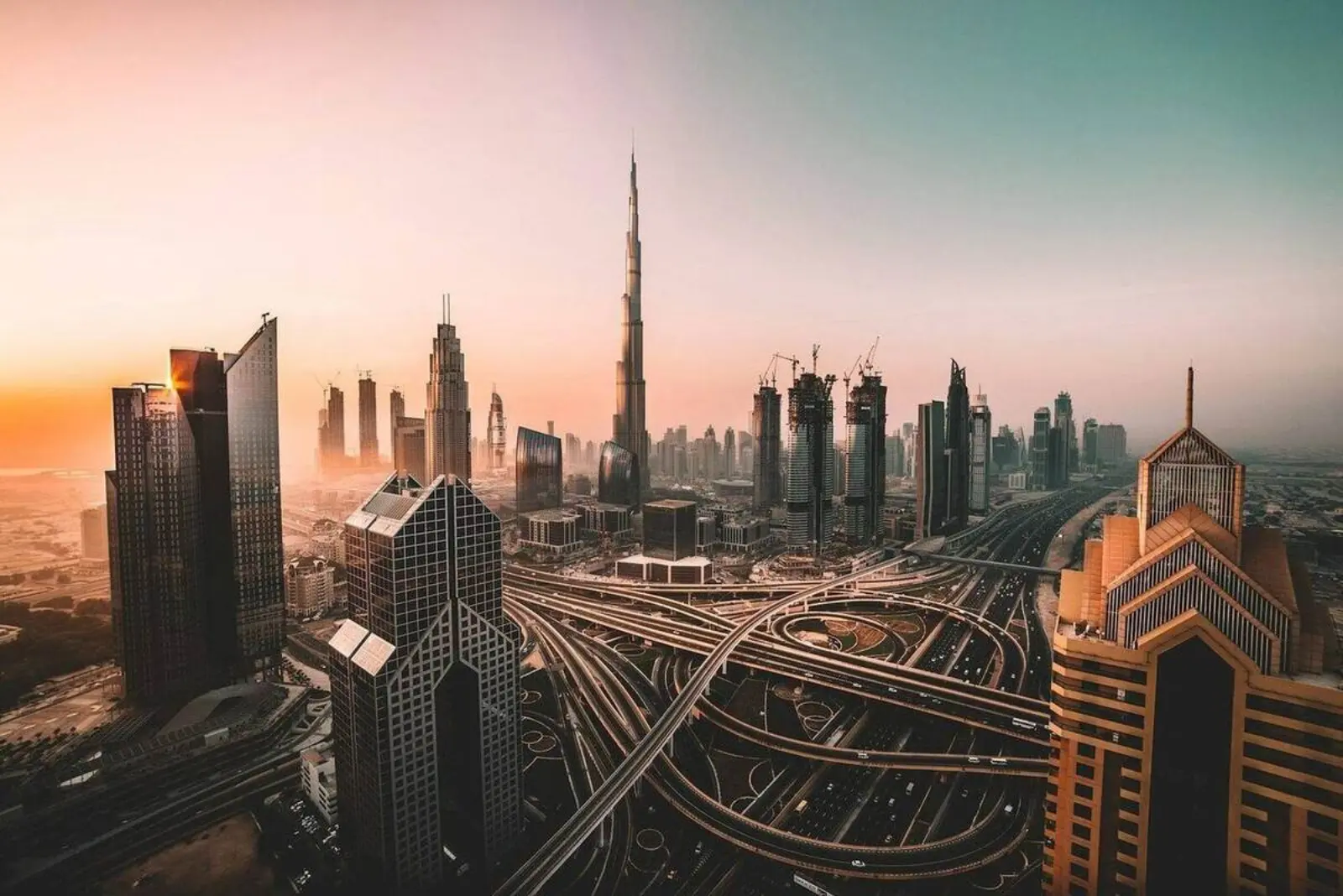
Dubai skyline at dusk
A dhow crossed to India on the monsoon. Today the crossing takes an afternoon, and a person still carries what matters most.
The story of the Gulf

Questions about the South Korea, Gulf relationship

01How did the Korea, Gulf relationship start?

With construction and engineering work in the 1970s, which was formative for both sides and left a durable commercial relationship behind it.

02What generates the urgent traffic today?

Semiconductors, batteries, marine and automotive, industries whose downtime economics make a courier the obvious answer.

03Why route Korean traffic through the Gulf?

For destinations in Europe, Africa, the Middle East and South Asia, because that is where the onward network departs from and where our operations desk sits.

04Does history matter operationally?

Only in that it explains why the relationships and the flights already exist.

South Korea · the Gulf

Put the corridor to work

History is context. The useful part is that the flights, the community and the trade all already exist, which is what makes a hand-carry viable at short notice.

From the operations desk

How jobs like this actually run

Illustrative cases, patterns from daily OBC work, details generalised for client confidentiality.

SemiconductorSHJ → TPE

A reticle case that had to stay upright, in sight, in the cabin.

Cleanroom pickup11:20
Via a same-day connection14:45
Fab dock06:50 +1
✓ Line stoppage avoided.
EventsLAS → RUH

A show-control console after a failure during load-in.

Vendor pickup20:10
Two-leg routing23:30
Front of house07:45 +2
✓ Doors opened on time.
FashionMXP → DXB

Runway samples finished in Milan on Thursday, the show was Saturday.

Atelier pickup18:00
Morning departure09:35 +1
Backstage19:20 +1
✓ Every look on the rail before the rehearsal.

Times are typical for these lanes; every job gets its own named flight and timeline before you confirm.

How it moves

The next flight out, not the next batch

Your consignment is booked on a named flight, boarding within hours.

Inside the aircraft cabin

Join the OBC network, become an on board courier

Every route on this site runs because somebody was willing to get on the plane with it. We are recruiting vetted couriers worldwide: we book and pay the flight, cover transfers and a hotel where an overnight is needed, and pay a fee for every completed assignment, stated in the offer before you accept it. You decide when you are available.

  • Flights paid
  • Fee per assignment
  • Assignments worldwide
  • You choose your dates
  • Training in our Academy
Aircraft wing above the clouds
Two of the world’s great airlines call these runways home. We book the seat, you track the flight number.
Departures, every hour, every direction

Get a quote for this route

Tell us what has to move and where it has to be. You get a fixed price and a departure time back, usually within 15 minutes, day or night.

Request a quote

Answered by a person, 24/7. No commitment. One form, one reply.

Request received. We reply by email from bookings [at] onboardcourier [dot] ae, usually within 15 minutes.

Confidential · no commitment · 24/7 availability

I need to send something

Book hand-carry delivery from the UAE to anywhere in the world, and follow it in real time. Same-day departure available.

Book a shipment → Client login

I want to fly as a courier

We pay the ticket and a fee per completed assignment. You choose when you are available.

Apply as an OBC → See the open position

Where to go from here

Continue the route

Where this page leads

Hand-picked next stops, every card is a live page, not a promise.

Three ways the desk can move South Korea and the Gulf

Same courier, same cabin, different amount of ground work. The desk recommends one of these in the quote and prices the other two if you ask.

The lean one

Airport to airport

  • A courier meets your driver airside at the departure airport
  • The consignment stays in the cabin for the whole flight
  • Your consignee, or their broker, collects at the arrival airport
  • Cleared in person, questions answered at the counter

Best when both ends have people who can reach an airport.

Price this for South Korea and the Gulf
What most clients book

Door to door

  • Collection at your address, sealed and photographed
  • One named courier from that door to the signature
  • Customs cleared in person on arrival, duties handled as agreed
  • Proof of delivery with signature, identity check and photograph

The full chain, one price, one person answerable for it.

Price this for South Korea and the Gulf
When the schedule will not do

Charter and relay

  • A second courier takes over where a visa or a duty limit stops the first
  • A private aircraft where the last airline departure has gone
  • Ground relay across a border when flying is the slower option
  • Priced case by case, in writing, before anything moves

For deadlines that a scheduled seat cannot reach.

Price this for South Korea and the Gulf

Every option is quoted as one all-in figure with a named flight. Nothing on this page is a rate card.

Ready when you are.

A firm quote within 15 minutes, 24/7. One courier, one price, a signature at the door.

Get a quoteHow it works