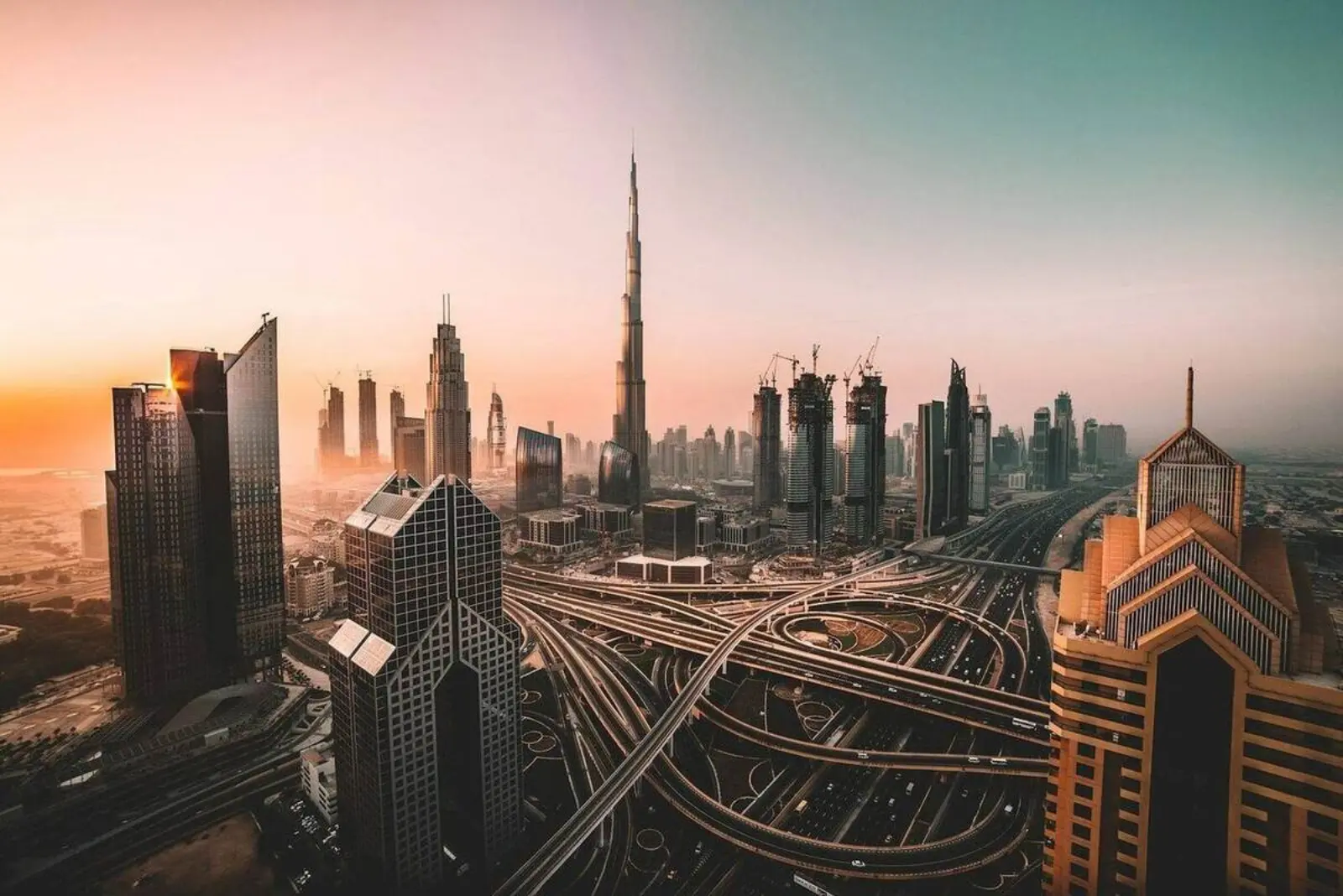
Put a world map on the wall and mark every city that was built, more or less on purpose, to be a small, wealthy, trade-and-finance hub for a much larger region around it, and two names come up before any others: Singapore and Dubai. Both are small in land and population next to the economies they serve. Both were shaped by a free port or free-zone strategy rather than by natural resources or a large domestic market. Both rank consistently among the world's busiest airports and busiest ports, and both are compared to each other so often in logistics and competitiveness rankings that the comparison is practically a category of its own. Singapore covers Asia-Pacific the way Dubai covers EMEA, and Singapore Airlines and Emirates, two of the world's most decorated long-haul carriers, run dense direct service between Changi and Dubai that ties the two together in a few hours rather than a few days.
What actually moves on that route is a fairly short, fairly predictable list, and almost all of it is a natural fit for a cabin rather than a hold. Electronics and semiconductor components travel between Singapore's fabrication and assembly clusters and the wider Gulf and African markets Dubai re-exports into. Gold and bullion move between two of the world's serious precious-metals trading centres, each with its own freeport and vault infrastructure. Fintech, banking and legal originals move between Marina Bay and the DIFC, two regulated financial districts that play near-identical roles for their regions and that, on paper, do not accept a scanned copy of anything that actually matters. Pharmaceutical and biotech material moves on a stability clock between two life-sciences bases that both built cold-chain infrastructure on purpose rather than by accident.
The number of Singaporeans actually living in the Emirates is modest next to the diaspora communities this network serves elsewhere, an estimated 5,000 to 8,000, by the sort of informal count that community associations rather than official statistics tend to produce, and that is worth stating plainly rather than inflating. What that smaller number does not capture is reach: a Singaporean passport is consistently ranked among the most powerful in the world for visa-free and visa-on-arrival access, which makes Singaporean professionals, bankers, fintech staff, engineers, finance and legal specialists already used to travelling for work, exactly the kind of candidate this desk wants to recruit and train as on board couriers: people who can be routed onto a flight on short notice, almost anywhere, without a visa application standing in the way.
Put together, the case for a dedicated Singapore desk has very little to do with volume and everything to do with fit. This is not a corridor carrying enormous cargo tonnage that a courier skims a sliver off; it is two comparable, well-run entrepot hubs sitting at opposite ends of the same air corridor, trading in categories, precious metals, regulated documents, electronics, pharmaceuticals, that were never suited to a consolidation window in the first place. In both directions, the choice is the same one it always is: an anonymous booking in a cargo hold with a tracking number, or a named, vetted person carrying the consignment in the cabin, on a direct flight, with a documented handover at both ends.