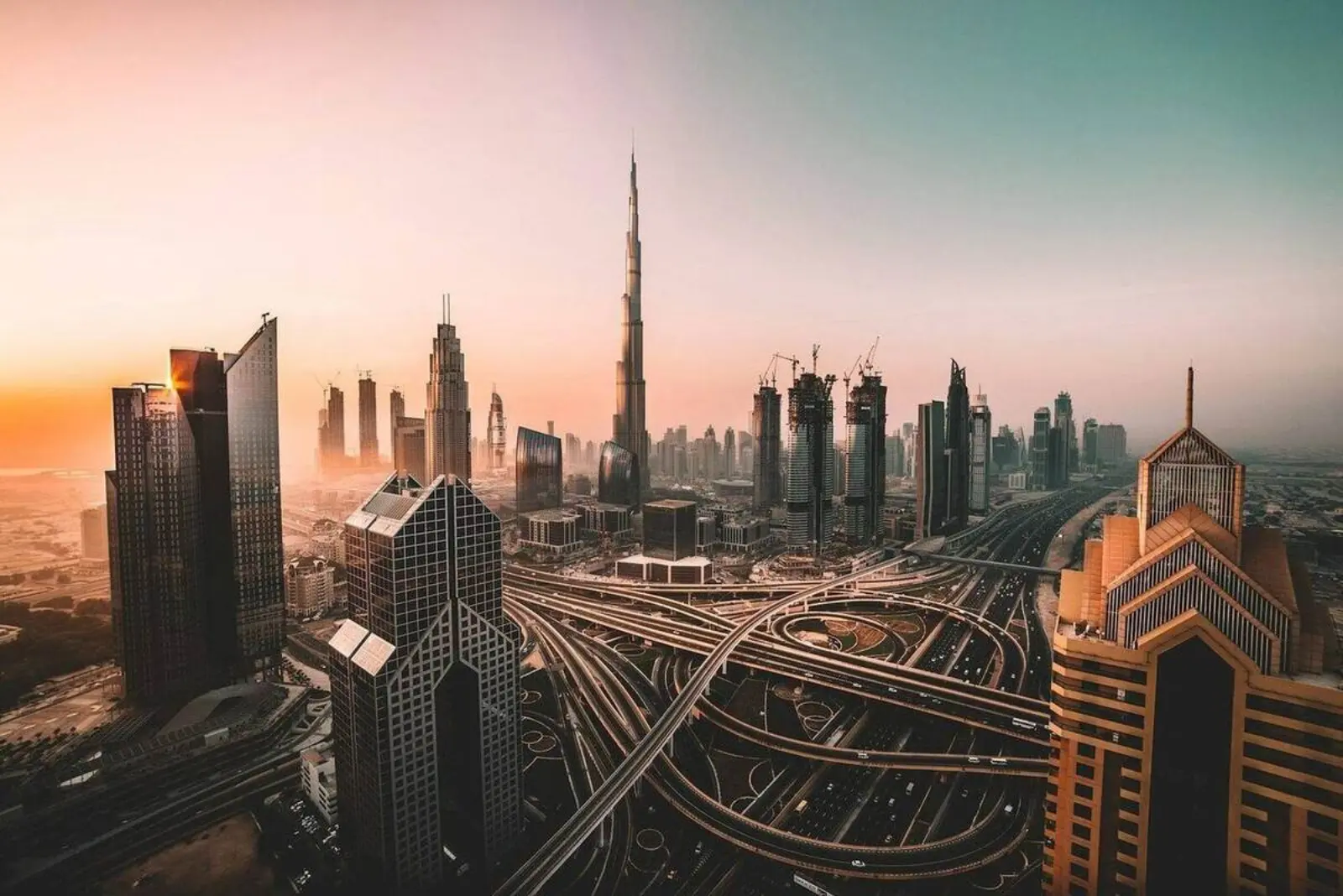
The city’s economy, the road in from the airport, and the delivery culture on the ground, the operational picture behind every quote on this lane.
The region’s largest working city
01Cairo is the administrative, financial and industrial centre of the Arab world’s most populous country, and its scale generates urgent traffic across every category at once. Government and the courts anchor downtown and, increasingly, the New Administrative Capital rising to the east. The oil and gas industry clusters its Egyptian headquarters in Maadi, south along the Nile. Banking and corporate offices spread through Zamalek, Garden City and the newer towers of New Cairo; the technology sector concentrates at the Smart Village on the desert road west of Giza.
02Manufacturing surrounds the city in purpose-built satellite zones, Sixth of October City to the west and Tenth of Ramadan City to the northeast among the largest, producing pharmaceuticals, textiles, appliances and automotive components. From this mix come the consignments Cairo is known for: consular and legal originals, pharmaceutical registration samples, tender documents for the region’s megaprojects, and production-critical spares for the industrial cities.
A short hop from the Gulf
Cairo International sits on the Heliopolis side of the city, northeast of the centre, and the Gulf connection is as good as it gets in this network: multiple daily nonstops link Dubai, Abu Dhabi and Sharjah with Cairo on a sector of a few hours, operated by both the Gulf carriers and Egyptair. For a courier this means genuine same-day missions in either direction and easy recovery if any single flight misconnects.
The ride into town depends entirely on the hour. The airport connects to the Ring Road and the elevated axes toward downtown; outside the peaks a courier reaches central addresses comfortably within the hour, while the evening crush can double that and more. Deliveries to the satellite cities, Sixth of October, Tenth of Ramadan, the New Administrative Capital, are motorway runs of an hour or more beyond the city and are planned as such.
Traffic as the operating environment
Cairo’s congestion is famous for good reason, and a courier works with its rhythms rather than against them. Friday morning is the quiet window in a city that otherwise never fully stops; the daily peaks are long and severe; and in Ramadan the pattern inverts, with the pre-iftar hour best avoided entirely. Motorbike messengers thread the traffic for everyday documents, the metro crosses the centre reliably, and an experienced driver’s knowledge of the bridges and ring roads is worth more than any map.
Summer heat is intense but rarely operationally significant; the rare winter rain, by contrast, can briefly overwhelm drainage and snarl the city. The practical skills here are precision of address, Cairo addresses reward a consignee phone number, and patience at the security desks of government and corporate buildings, where sign-in procedures add time a schedule should anticipate.
Cairo to the Gulf: documents above all
The outbound flow toward the UAE and the wider Gulf is dominated by paper with legal force: attested and consular-legalised documents for the enormous Egyptian professional community working in the Gulf, corporate originals for cross-border transactions, court and arbitration filings, and university credentials on attestation deadlines. Alongside the paper move pharmaceutical samples from Cairo’s substantial drug industry, fabric and product samples from the industrial cities, and media material from the region’s film and television capital.
Bookers range from law firms and corporate service providers to regulatory-affairs teams and production houses. What Cairo offers them is frequency: with nonstops spread through the day, an escorted consignment can be matched to the exact deadline on the Gulf side rather than to a single daily departure.
The same frequency serves the inbound direction: Gulf-based firms bidding into Egypt’s construction and energy programmes send tender originals and technical submissions to Cairo offices on closing dates, and the city’s hospitals and laboratories receive time-critical medical and scientific material on the morning flights.